Neta Dor
Seams
Guest Artist – Hanan Abu Hussein
CuratorAdi Shabtay-Pappo & Nir Harmat
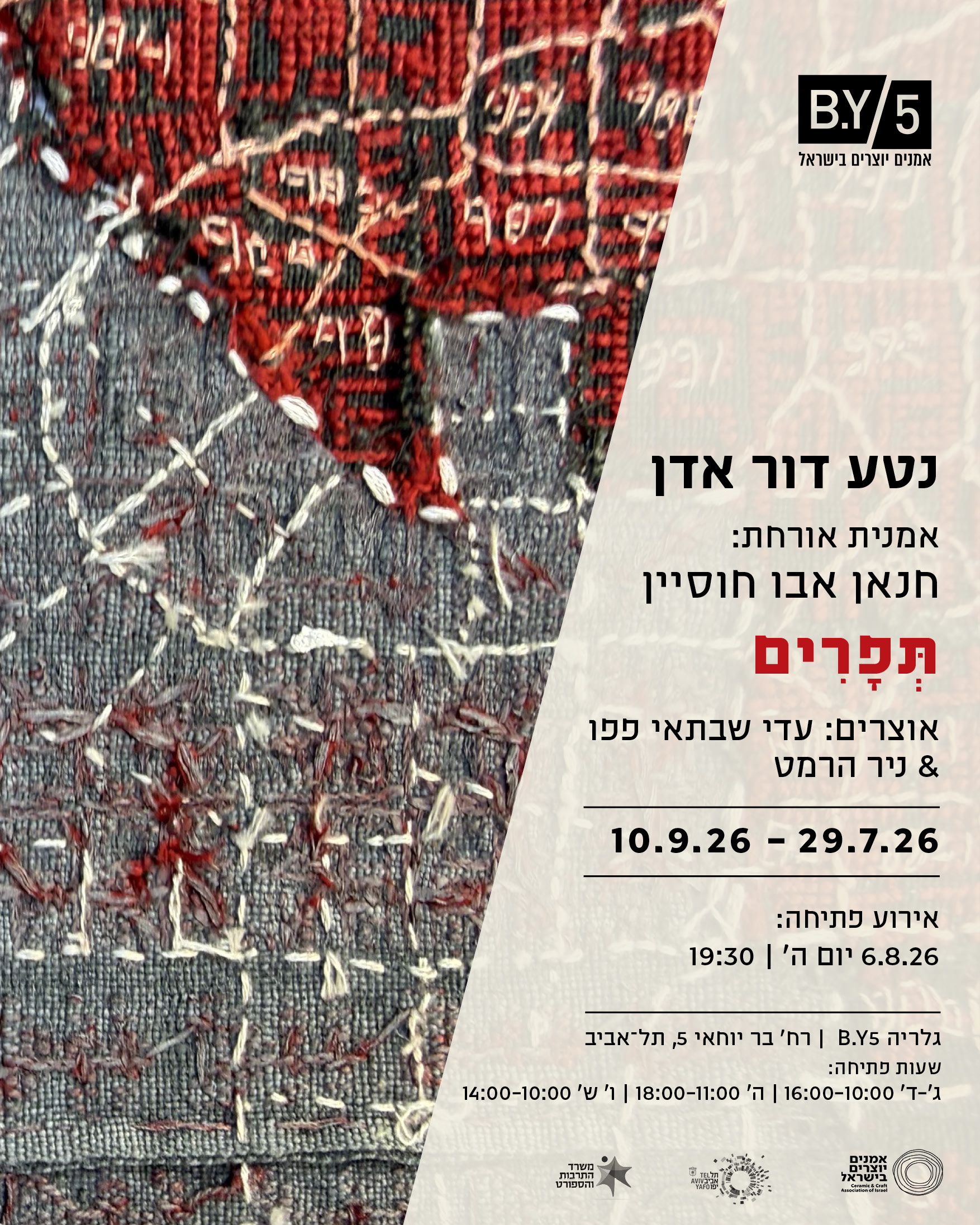
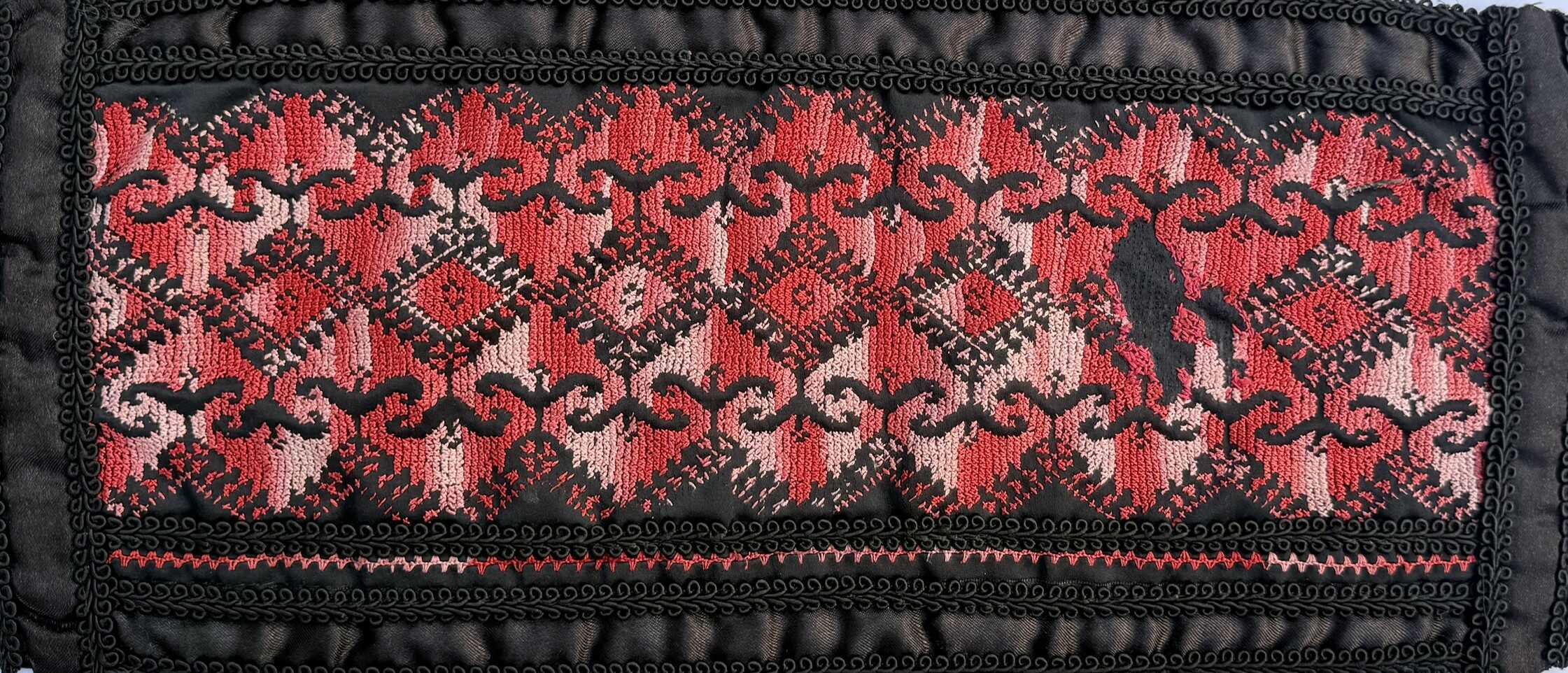
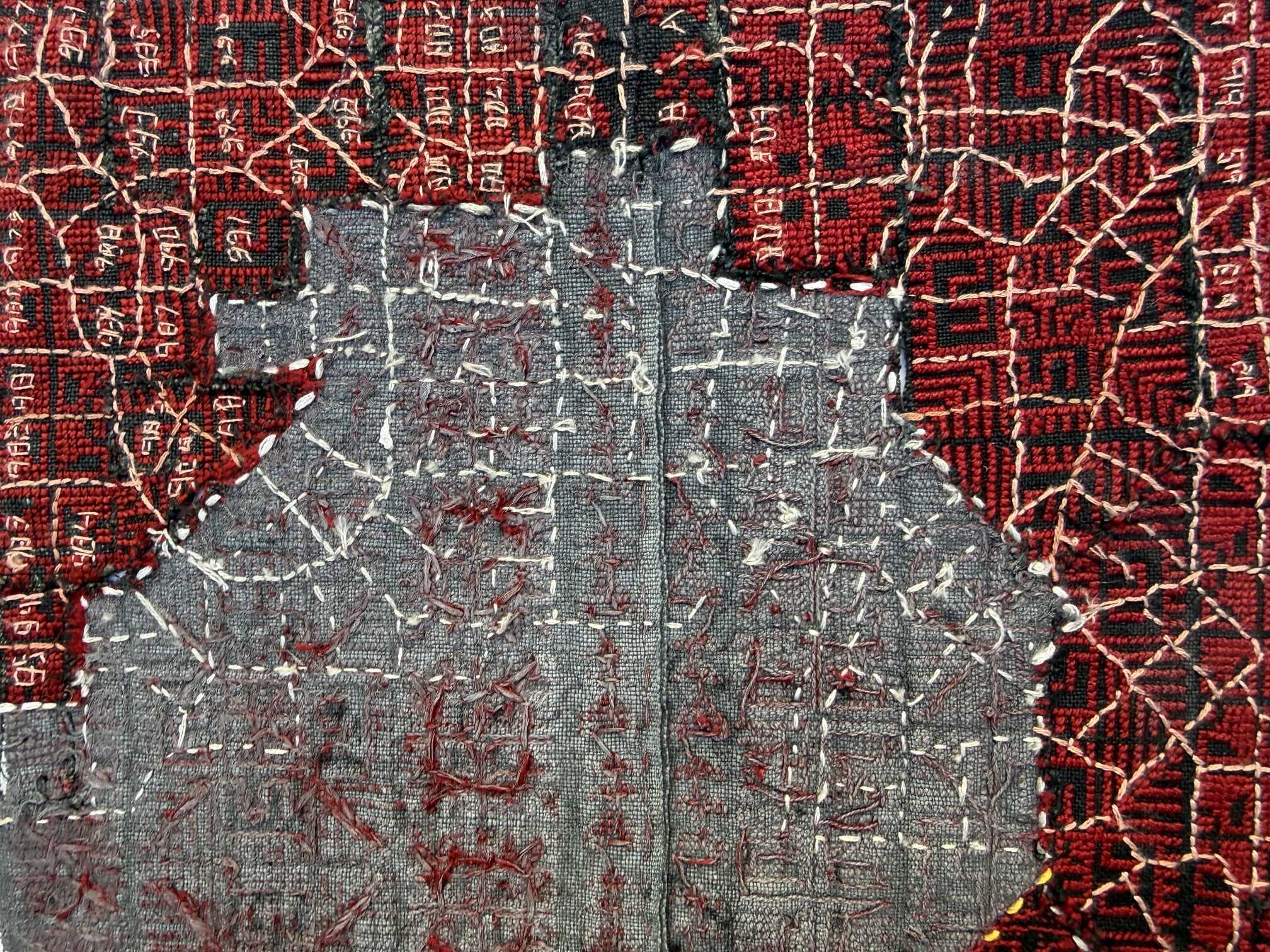
The exhibition Seams presents Neta Dor Eden’s latest body of work, where textiles and the body become surfaces inscribed with memory, mourning, and political rupture. Using needle, thread, and material intuition, Dor Eden simultaneously mends and unravels, confronting the domestic sphere with destruction and lamentation. Guest artist Hanan Abu Hussein joins the exhibition, her work echoing and deepening Dor Eden’s project through gestures of warmth, softness, and femininity.
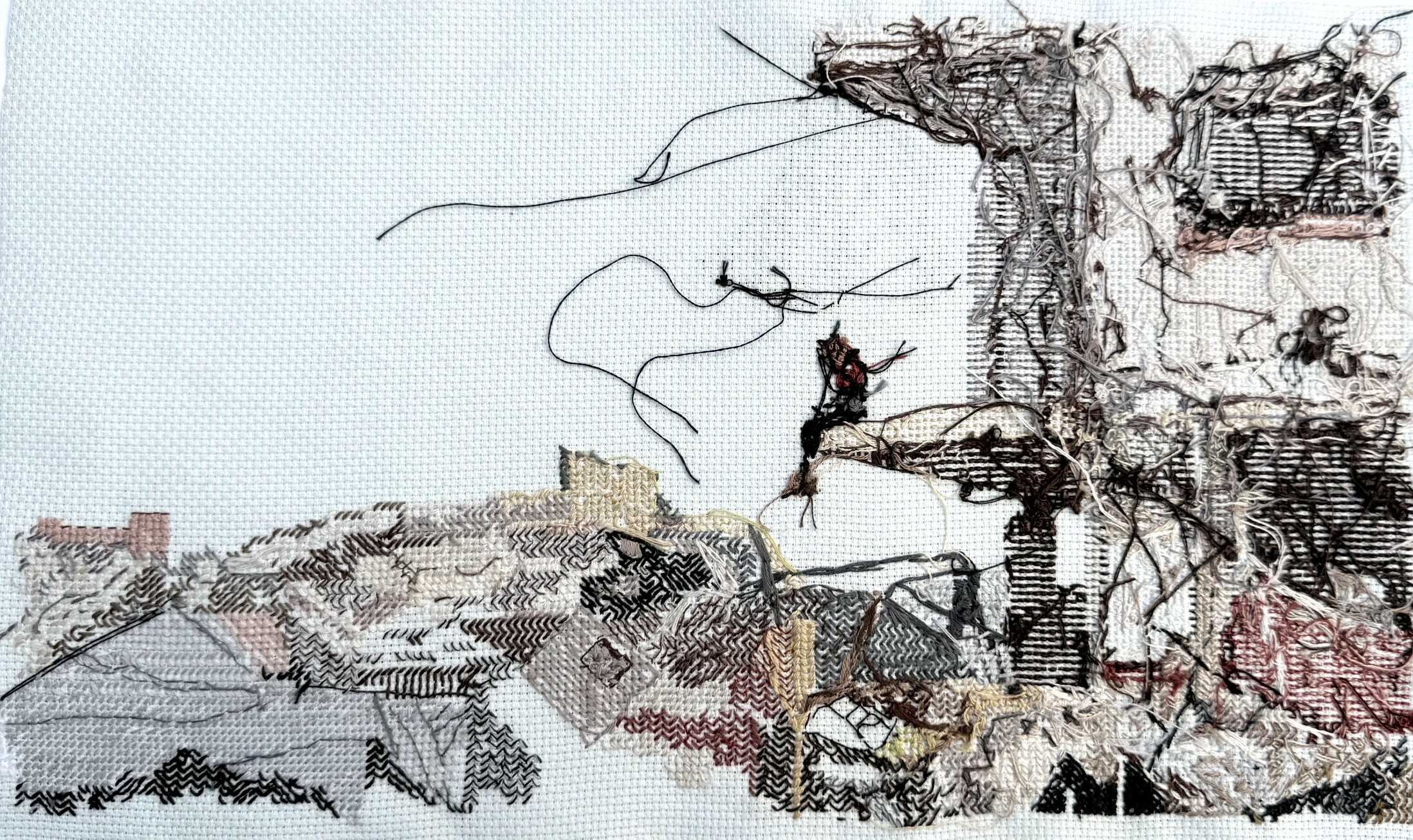
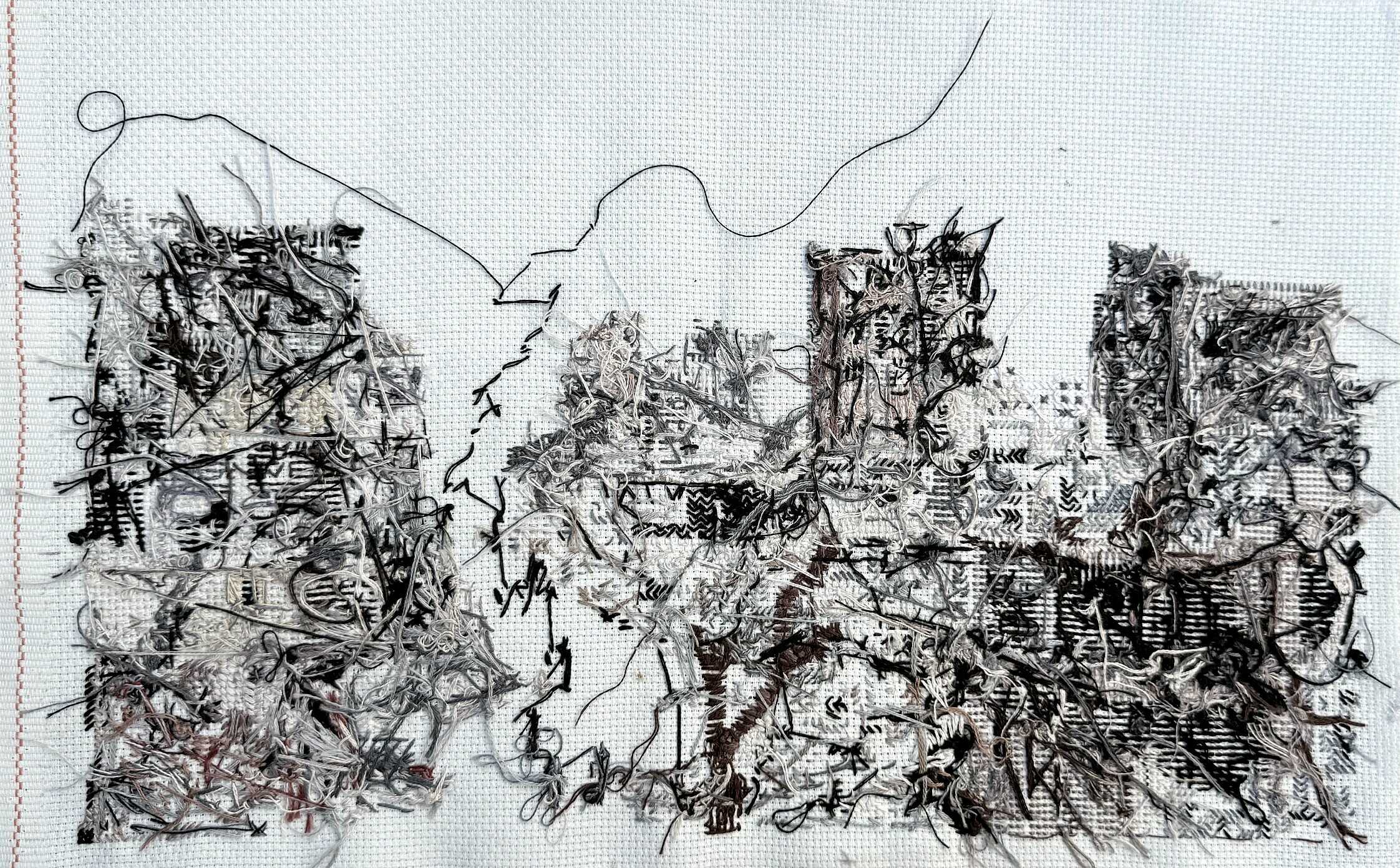
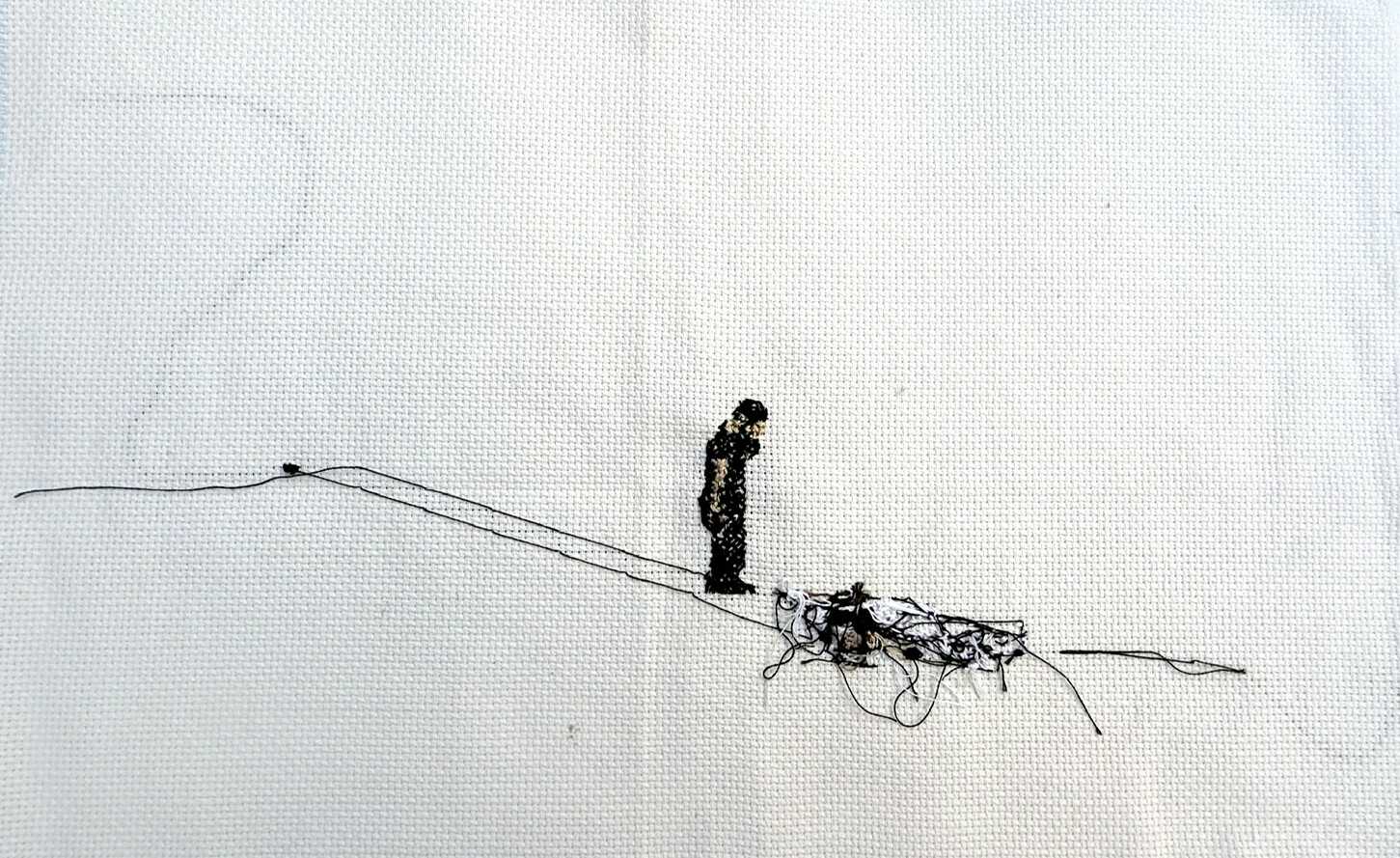
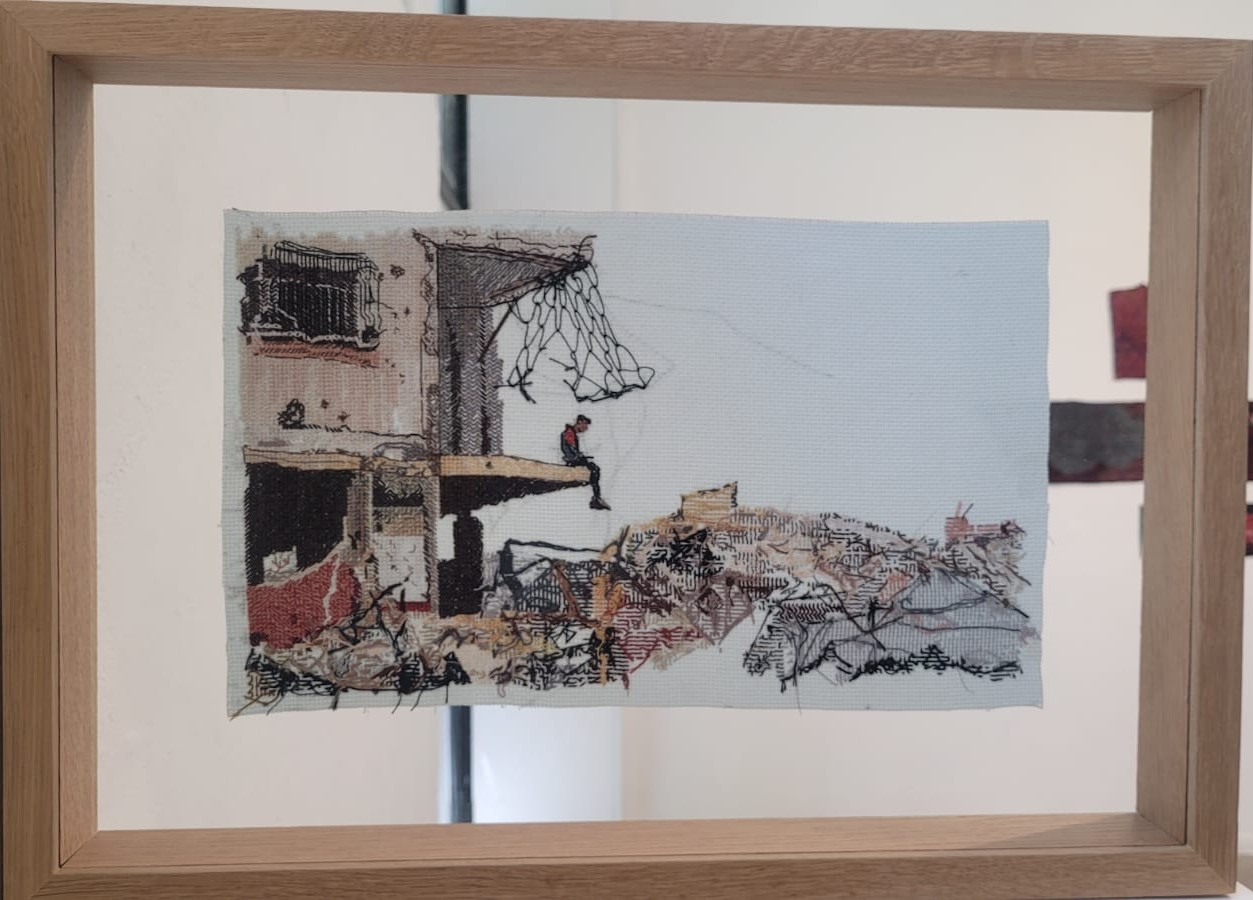
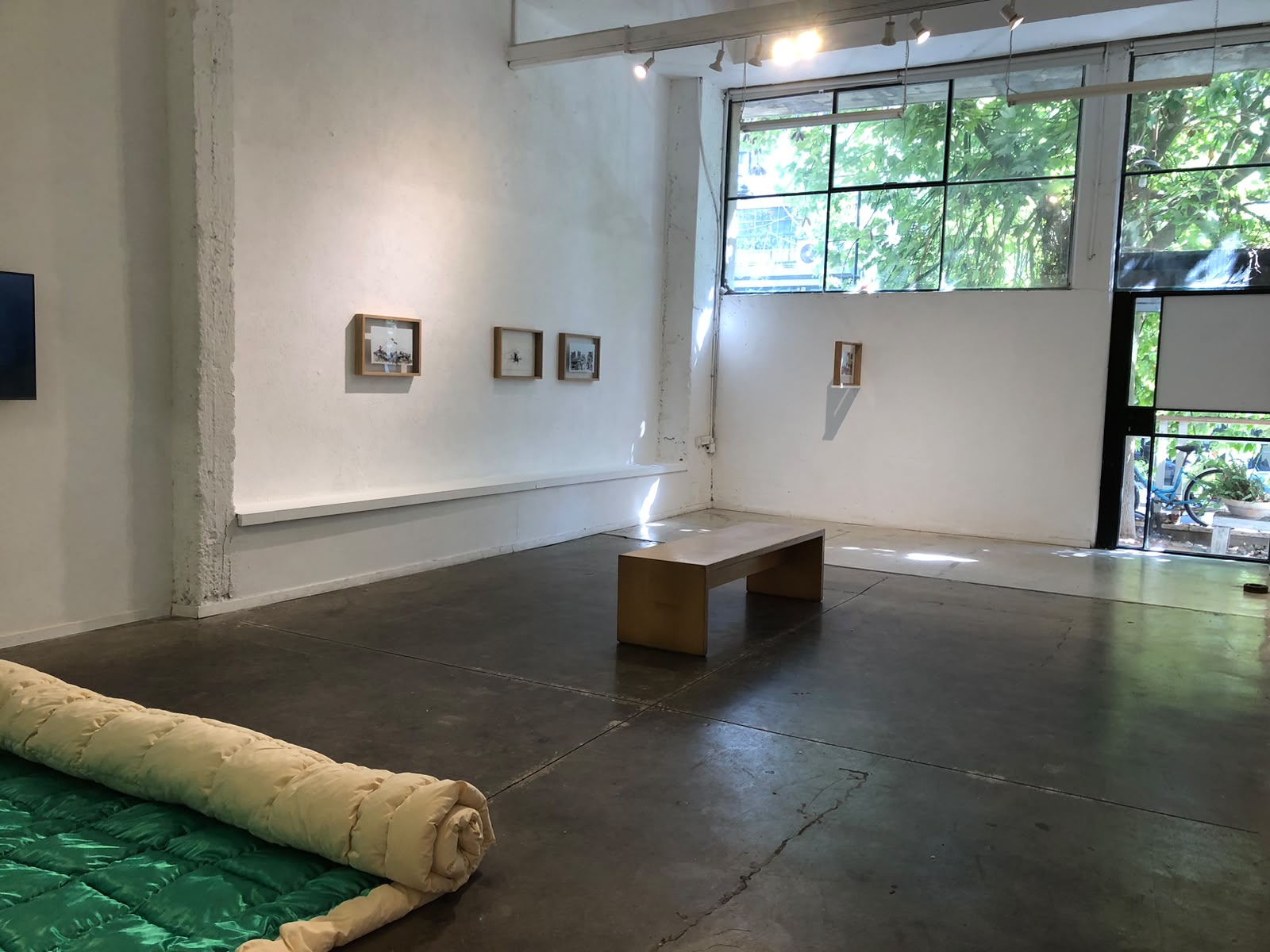
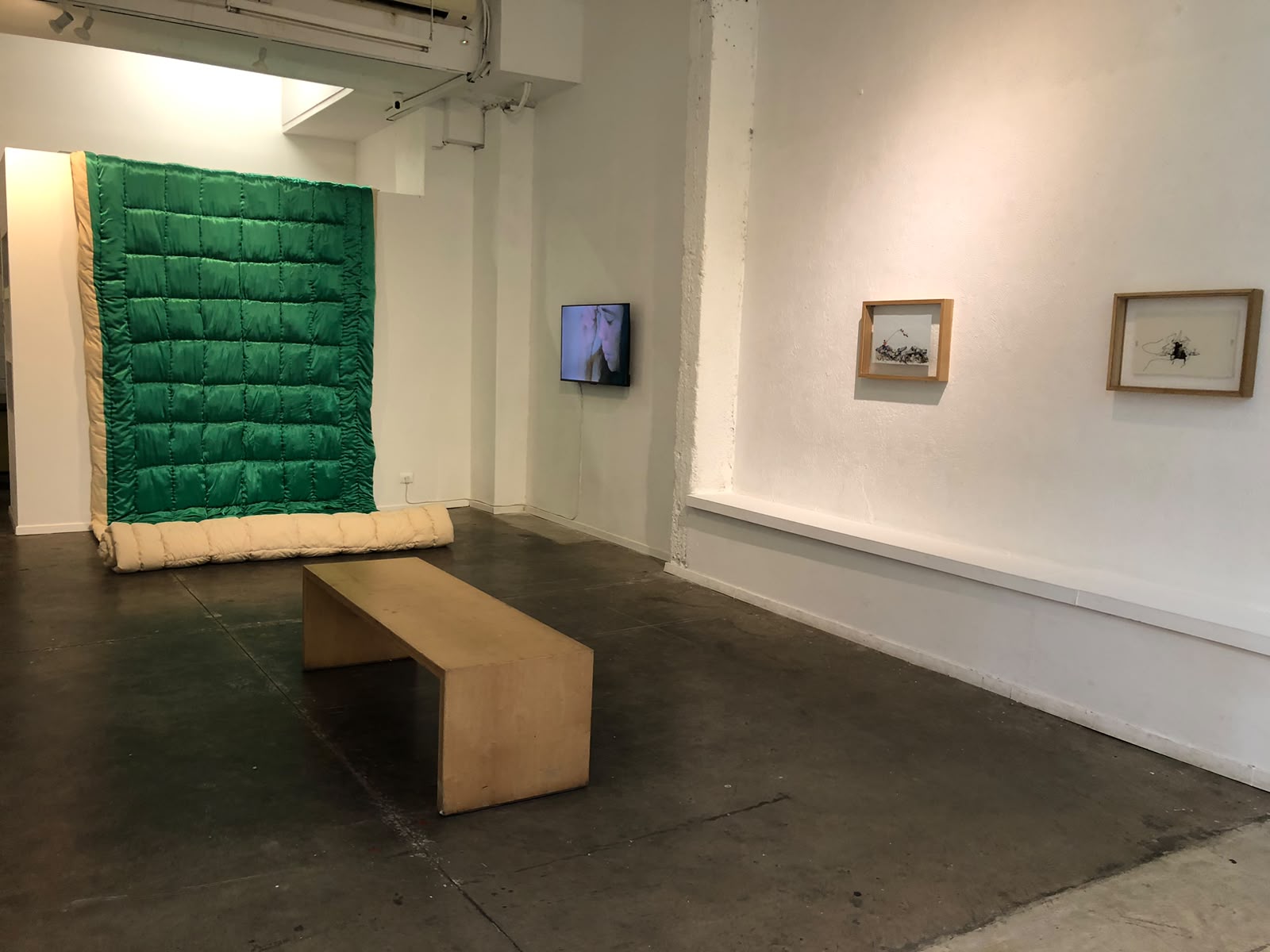
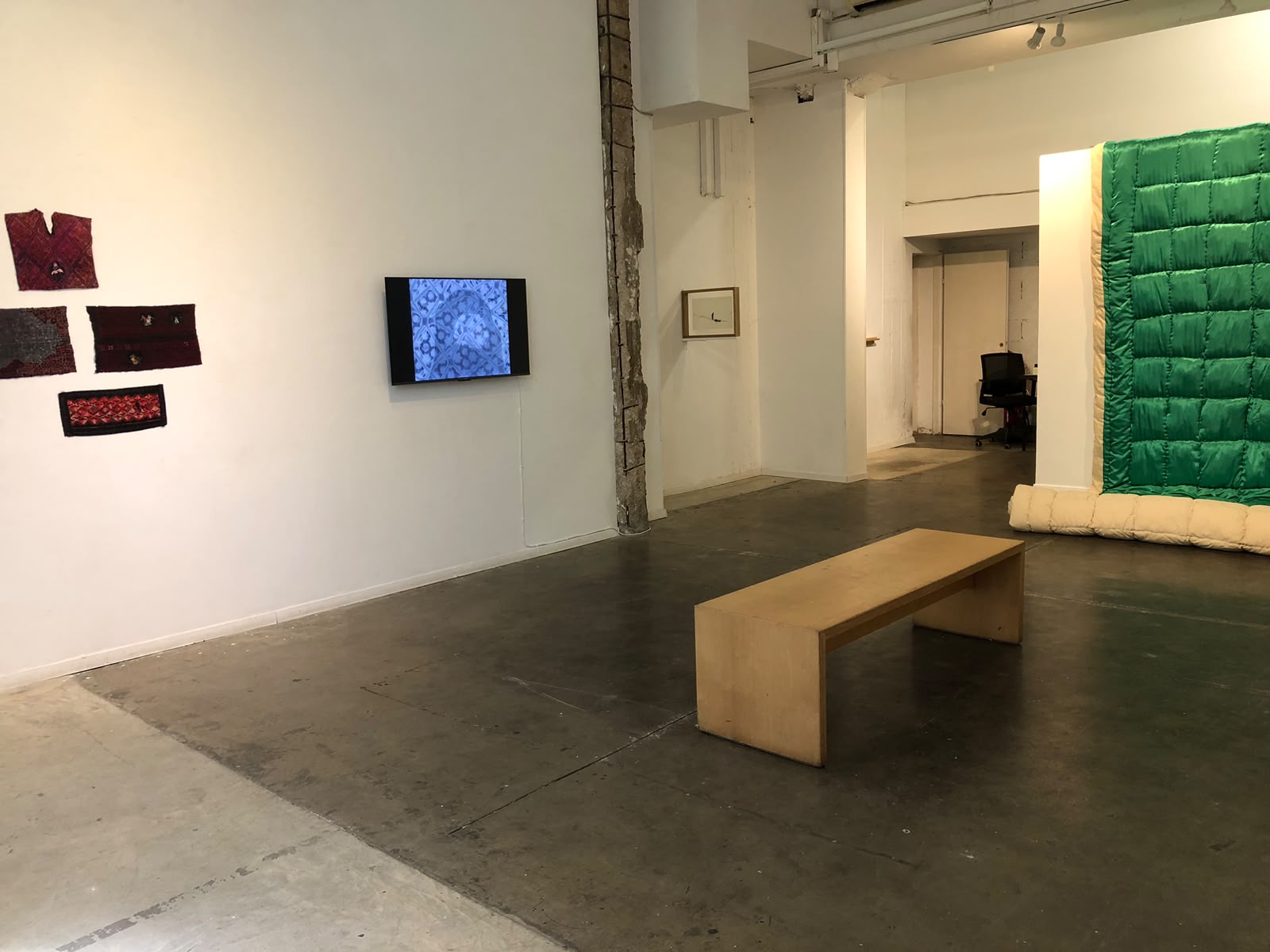
Dor Eden’s embroideries draw on images of destruction from Gaza, presented as double-sided works. The front offers a processed, legible view of the devastated landscape, while the reverse reveals a tangle of threads, knots, and loose ends. Exposing the embroidery’s “inner workings” is a conceptual act that parallels material disintegration with physical destruction—reflecting the fractured skeleton of a war zone.
Alongside these works, an animated video features veiled female figures moving against a visual matrix reminiscent of human cells and mashrabiya patterns. This interplay between the concealed body and cellular structures extends embroidery into video, reading the female body as a wounded archive—both personal and collective.
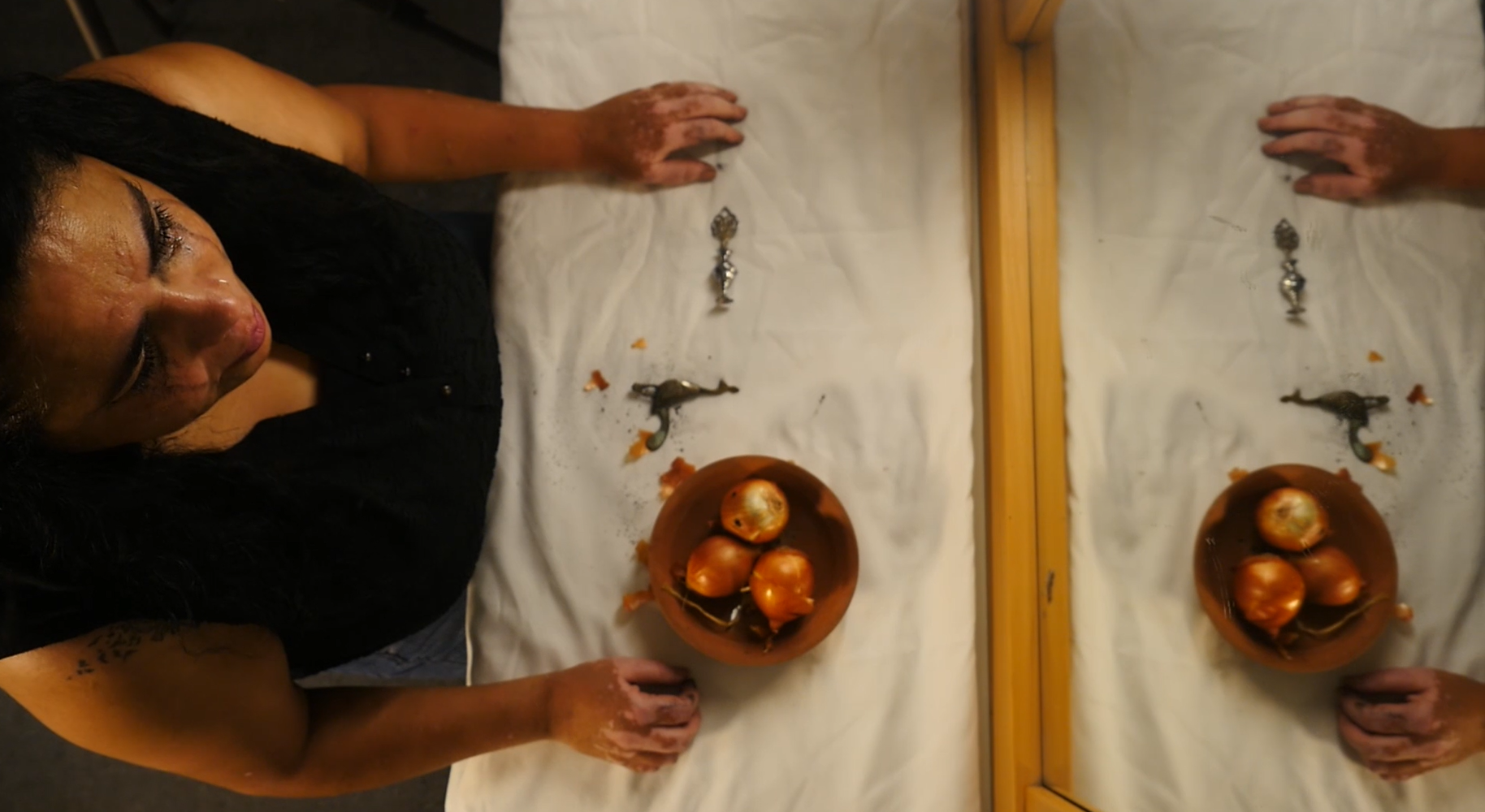
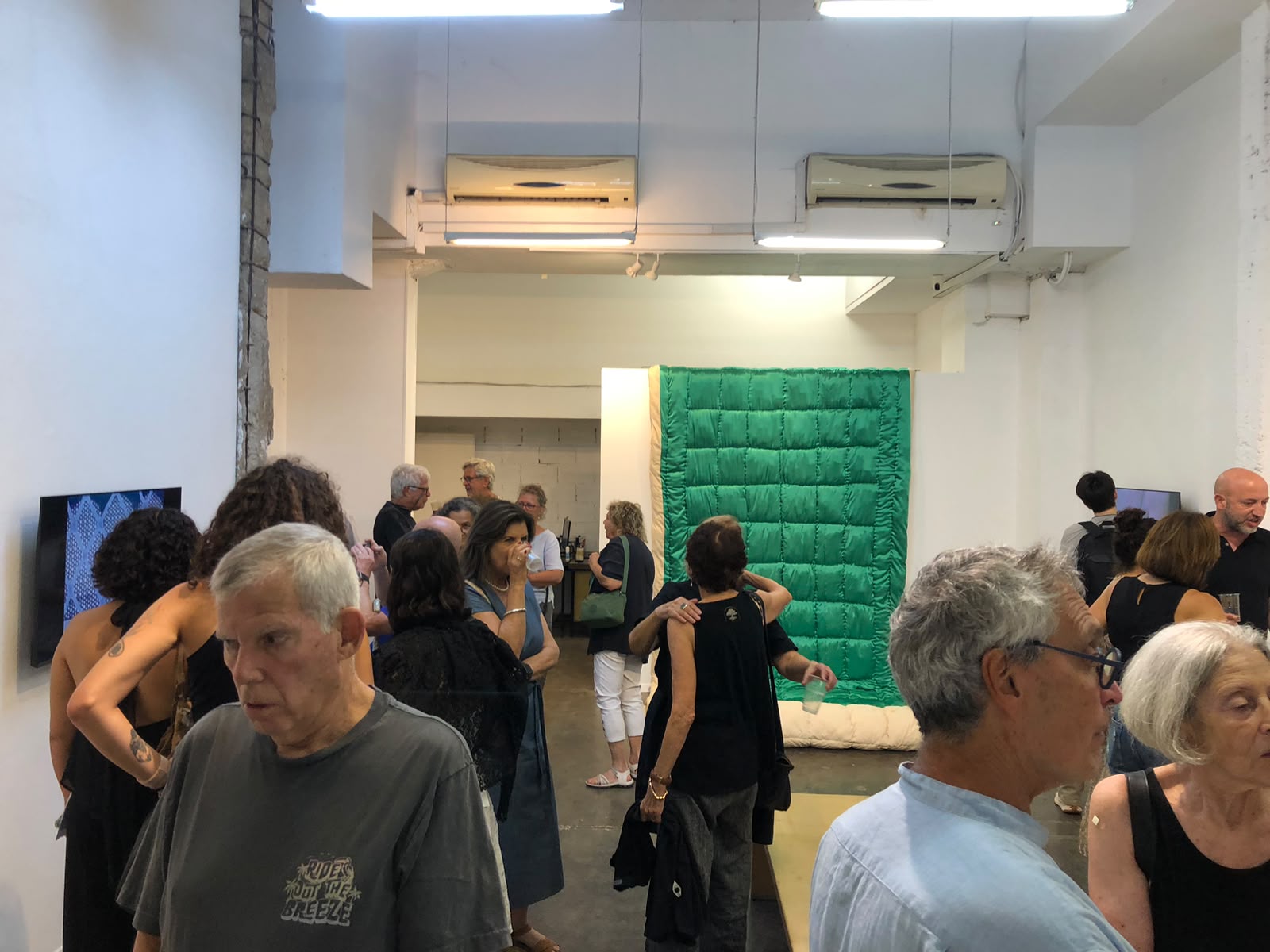
Hanan Abu Hussein presents a monumental handmade blanket crafted with traditional techniques, offering a soft, enveloping presence. The blanket holds a complex tension: carrying memories of injury, fear, and loss alongside the warmth and protection of home, while its tactile surface provides a space of consolation. In her accompanying video, Abu Hussein uses her mother’s traditional kohl applicator, filled with onion instead of kohl. The resulting tears run black down her face, turning an intimate act of adornment into a public ritual of grief and outcry.
Abu Hussein’s voice weaves directly into Dor Eden’s work. The threads dangling from the back of the embroideries echo the dark streams on Abu Hussein’s face. Together, both artists reveal how a feminine, material connection can confront ruin and mourning—bringing the hidden to light while positioning textile as an archive of injury and a gesture of compassion.